Major Competing Parties and Leaders
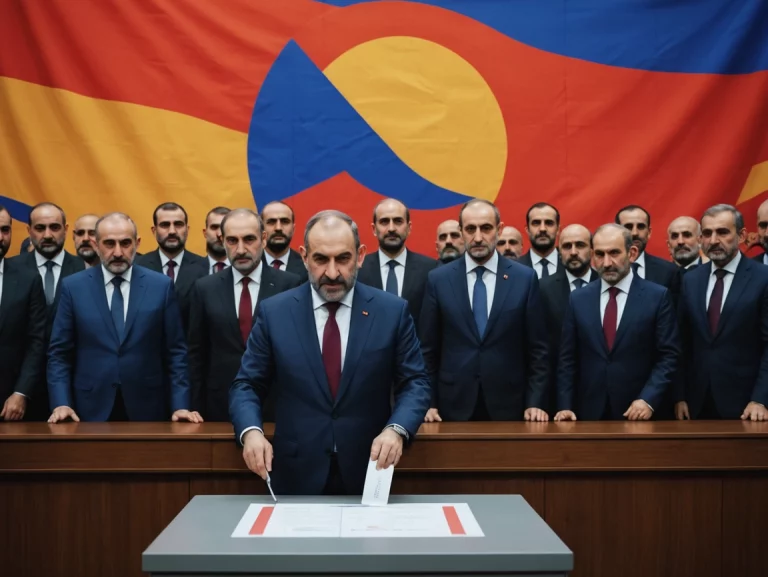
- Civil Contract (KP) – The ruling party led by Prime Minister Nikol Pashinyan, who came to power after the 2018 “Velvet Revolution.” Civil Contract won a large majority in 2021 (71 of 107 seats)en.wikipedia.org, but faces eroding support ahead of 2026. Pashinyan remains the incumbent PM and will again be his party’s prime ministerial candidateen.wikipedia.org.
- Armenia Alliance (Hayastan) – An opposition alliance headed by former president Robert Kocharyan. It currently holds 29 seats as the main parliamentary oppositionen.wikipedia.org. Kocharyan’s bloc is allied with the nationalist ARF (Dashnaktsutyun) and brands itself as a defender of Armenian interests (especially on Artsakh/Nagorno-Karabakh). In recent polls it has been polling in the single digitsarminfo.infoarminfo.info.
- “I Have Honor” Alliance – A smaller alliance associated with ex-president Serzh Sargsyan (leader of the former ruling Republican Party) and led in 2021 by former security chief Artur Vanetsyanen.wikipedia.org. It holds 6 seats in the outgoing parliament. Polling support is low (around 2–3%)arminfo.infoarminfo.info, and it may seek to join forces with other opposition groups to clear the 5% threshold.
- Prosperous Armenia (BHK) – A prominent party led by business tycoon Gagik Tsarukyan. Once a powerful force in Armenian politics, it failed to enter parliament in 2021 (falling below the threshold) and has polled only ~2% recentlyarminfo.infoarminfo.info. Nevertheless, Tsarukyan’s party could play a role in opposition coalitions or attract protest votes with its populist, pro-Russian stance.
- New and Extra-Parliamentary Forces – Several new movements are vying for influence: Democracy, Law and Order (DOK) party, led nominally by Vardan Ghukasyan (and reportedly backed by diaspora billionaire Samvel Karapetyan), has surged to around 6–7% in pollsarminfo.info. DOK calls for uniting “all responsible political forces” and plans to run as part of a broad alliancepanarmenian.netpanarmenian.net. The Armenian National Congress (ANC) of ex-President Levon Ter-Petrosyan is also returning to the fray – ANC will participate in 2026 with Levon Zurabyan (Ter-Petrosyan’s deputy) as its candidate for PMen.armradio.amen.armradio.am, aiming to form a “broad political alliance.” Additionally, other recent actors like the Mother Armenia bloc (a nationalist coalition that performed well in the 2023 Yerevan city elections) and Republic Party’s “Together” Movement (led by former PM Aram Sargsyan) are expected to compete. The opposition landscape is fragmented, with many extra-parliamentary figures attempting to forge united fronts against Pashinyan’s party.
Current Polling Data and Electoral Forecasts
Recent opinion polls suggest a highly fragmented electorate and a decline in support for the ruling party. Key takeaways include:
- Diminished Lead for Civil Contract: Surveys through 2024–25 show Pashinyan’s Civil Contract polling only in the low teens. For example, a credible January 2025 MPG/Gallup poll found just 11.3% of respondents would vote Civil Contract if elections were “next Sunday,” an unprecedented low for Pashinyan’s camparminfo.infoarminfo.info. Another poll in mid-2024 likewise put Civil Contract’s support around 13–15%en.aravot.amen.aravot.am – a steep fall from the 54% vote share it had in 2021.
- Weak but Combined Opposition: Individually, established opposition parties poll in single digits. Kocharyan’s Armenia Alliance was at ~6–7% in early 2025arminfo.info. Sargsyan’s I Have Honor bloc and Tsarukyan’s Prosperous Armenia each registered only ~2–3%arminfo.infoarminfo.info. Collectively, however, the traditional opposition (ex-presidents’ forces) could sum to the low teens. One May 2025 poll noted about 12% would vote for the Kocharyan and Sargsyan-led parties combinedbalcanicaucaso.org. This hints that if the opposition unites or forms alliances, they could rival Civil Contract’s total.
- Emergence of New Alternatives: The uncertainty in the electorate is giving rise to new players. The DOK (Democracy, Law and Order) party has quickly gained traction – for the first time surpassing Kocharyan’s bloc in one poll (DOK at 6.8% vs. Armenia Alliance 6.5%)arminfo.info. DOK’s outsider appeal (tied to the Karapetyan family’s influence) signals voter appetite for alternatives beyond the known elites. Another new coalition, Mother Armenia, showed strength in local elections and could translate that into a national campaign. These new forces make the outcome less predictable, as their ratings are still evolving.
- High Undecided and Protest Vote: A striking feature is the very large share of Armenians who are undecided or mistrust all options. Polls report 30–40% of respondents either have not decided, refuse to answer, or say they’d vote “against all”arminfo.infobalcanicaucaso.org. For instance, in the January 2025 MPG survey, over 27% said they would not participate, ~15% didn’t know, and 13% would vote against all – in total, around 55% were not committed to any partyarminfo.infoarminfo.info. This huge bloc of unaligned voters means forecasts are highly uncertain. Turnout and late swings will be decisive: many citizens are disillusioned and could either stay home or make up their minds only at the last minute. The volatility also raises the possibility of new coalitions forming before the vote to capture these protest voters.
Overall, no single party is currently on track for a majority, unlike in 2021. Pashinyan’s Civil Contract, while still the largest single party in polls, might win far under 50% of seats and could even be forced into coalition if it cannot secure the bonus-seat majority rule. Conversely, the opposition’s best hope may be a broad alliance (as various leaders are attempting) to concentrate the anti-Pashinyan vote. If multiple opposition factions remain divided, the electoral system’s 4% threshold and winner’s bonus could allow Civil Contract to retain power with a plurality. In sum, Armenia is heading into an unusually competitive and unpredictable election, with most analysts expecting a fragmented National Assembly and potentially lengthy post-election coalition negotiations.
Expected Electoral Integrity and Fairness
Electoral integrity in Armenia has improved markedly since 2018, but the 2026 elections will be a critical test. International observers deemed the last elections (June 2021 snap polls) competitive and generally well-administered, while noting the campaign was extremely polarizedodihr.osce.org. The OSCE/ODIHR 2021 final report concluded the elections were “competitive and generally well-managed” despite harsh rhetoric and some legal uncertainty due to last-minute reformsodihr.osce.org. The vote-count and technical process were assessed positively overall by observers, and the results were upheld by Armenia’s Constitutional Courtfreedomhouse.org. This suggests that, procedurally, Armenia can hold a free election and that ballots will be largely respected.
However, recent signs point to concerns about the fairness of the upcoming campaign environment. Over the past year, watchdog groups and media have flagged some backsliding in democratic practices. The ruling authorities have shown intolerance toward critics in certain instances, which could affect the pre-election climate:
- In March 2025 local elections (e.g. in Gyumri), there were allegations of abusive investigations and pressure on opposition candidates, described as tactics by the government to suppress emerging challengersbalcanicaucaso.org. The Stockholm Centre for Eastern European Studies noted these maneuvers and warned that similar methods “may see more of ahead of the 2026 elections,” reflecting the ruling party’s anxiety about genuine challengersbalcanicaucaso.org.
- Freedom of speech and media: There have been alarming hints of media restrictions. In late 2024, Pashinyan and officials complained about the media’s handling of disinformation and warned that if outlets do not “self-regulate,” the government might “curb press freedom” through legal measuresbalcanicaucaso.orgbalcanicaucaso.org. Such statements, alongside an incident where pro-government figures assaulted an opposition bloggerbalcanicaucaso.orgbalcanicaucaso.org, have raised red flags for civil society. They suggest that the administration’s tolerance for criticism is shrinking under pressure, which could translate into a less open media environment during the campaign.
- Use of administrative resources: Past observer recommendations urged Armenia to curb misuse of state resources and vote-buyingodihr.osce.org. In 2021 those issues were limited compared to prior regimes, but in the run-up to 2026, opposition members accuse Pashinyan’s team of subtly leveraging incumbency (for example, public-sector employment and local officials’ influence) to gain advantage. Transparency International’s Armenia chapter has called for vigilance that state funds or institutions are not directed toward the ruling party’s campaign. Any perception of imbalance or pressure on voters (e.g., public servants) could undermine the “level playing field.”
Despite these concerns, Armenia remains rated “Partly Free” by Freedom House and still fares better than many regional peers in terms of electoral democracyfreedomhouse.orgfreedomhouse.org. The presence of active opposition parties, a generally pluralistic media (including robust independent outlets and social media debate), and the expected deployment of international observers (OSCE/ODIHR has observed past Armenian elections) are positive signs. The government has invited international observation for 2026, indicating it seeks legitimacy in the process.
In summary, the election is likely to be free in terms of voters having a genuine choice on ballot and votes being counted accurately, but it may not be entirely fair in terms of campaign conditions. Intimidation of opposition figures, unequal access to media, and polarizing or even inflammatory rhetoric (already a hallmark since 2018) could mar the environmentodihr.osce.org. The integrity of the vote itself is expected to be upheld, yet whether the broader process will meet the highest standards of fairness will depend on how authorities handle criticism and whether they refrain from exploiting levers of power during the campaign. Domestic and international watchdogs (e.g. Transparency International, local observer NGOs) will be monitoring closely, making electoral integrity itself one of the stakes of this election.
Key Issues in the Campaign
The 2026 campaign is centered on a set of existential issues for Armenia’s future, reflecting the trauma of recent conflicts and a crossroads in foreign policy. The debate is intense and often framed as a choice between starkly different paths for the country. Major campaign issues include:
- Peace with Azerbaijan vs. Preserving “National Honor”: The most urgent issue is Armenia’s policy toward Nagorno-Karabakh (Artsakh) and Azerbaijan after the 2020 war and the 2023 fall of the remaining Armenian-held territory there. Pashinyan is campaigning on a platform of making “Real Armenia” at peace with its neighborscarnegieendowment.org. He has tentatively agreed to a U.S.-brokered framework peace deal with Azerbaijan (initialed in Aug 2025) and seeks to normalize relations with Azerbaijan and Türkiye – including potentially opening borders and transport linkscarnegieendowment.orgcarnegieendowment.org. His slogan of “Real Armenia” emphasizes focusing on the Republic of Armenia’s prosperity and security within its actual borders, rather than irredentist claimscarnegieendowment.org. In contrast, the opposition (especially nationalist and former regime elements) accuses him of “betraying national interests.” They invoke the idea of “Historic Armenia”, implying that Pashinyan’s peace agenda means giving up on the Armenian-populated Karabakh region and other historical claimscarnegieendowment.org. This resonates with many voters’ emotions after the loss of Karabakh. Opponents charge that Pashinyan is ready to make unacceptable concessions – such as recognizing Azerbaijani sovereignty over all of Karabakh and even allowing a contentious transport corridor through Armenia – in exchange for illusory peace. The status and rights of Nagorno-Karabakh Armenians (all of whom fled to Armenia in 2023) is a flashpoint: government critics say those refugees were abandoned and that Pashinyan’s signing of a peace treaty will permanently forfeit any special status or international protections for them. Pashinyan argues that Armenia has no choice but to accept painful compromises to avoid future war and unblock the economy. Polls show Armenian society is divided but somewhat pragmatic on this: as of mid-2025, about 47% of Armenians supported signing a peace treaty with Azerbaijan, while 40% were against itcarnegieendowment.org. The election will be in large part a referendum on peace vs. “not peace at any price.”
- Geopolitical Orientation – West vs. Russia: Closely intertwined with the above is Armenia’s foreign alignment. Pashinyan has been openly distancing Armenia from its traditional patron Russia, which Armenians feel failed to protect them against Azerbaijani aggression. Under Pashinyan, Armenia has increased cooperation with the EU and United States and even suspended some obligations under the Russian-led CSTO alliancefdd.org. He touts projects like the U.S.-backed “Trump Route” railway plan (connecting Armenia and Azerbaijan) and a prospective EU monitoring mission on the border as ways to enhance Armenia’s security independent of Moscowcarnegieendowment.orgcarnegieendowment.org. The opposition, however, is generally more pro-Russia (or at least skeptical that the West can replace Russia as a security guarantor). They criticize Pashinyan for alienating Moscow, noting that Armenia’s security and economy still rely heavily on Russia (energy imports, a Russian military base, and migrant remittances). Many voters remain wary of severing ties with Russia: even after recent frustrations, about 60% of Armenians “still want Russia involved” in negotiations with Azerbaijanbalcanicaucaso.org. Campaign rhetoric from opposition figures suggests that if they win, Armenia would repair relations with Moscow and possibly adopt a tougher posture toward Azerbaijan with Russian backing. Pashinyan’s team responds that “Russia’s protection is an illusion” after it stood by during Azerbaijan’s assaults, and that Armenia must diversify its alliances. Thus, the election debate frames a strategic choice: continue a westward pivot (toward Europe, the US, possibly new security partnerships) or revert to the Russian orbit. This has become a sharp cleave in Armenian politics, even though in reality many Armenians prefer a balance. Expect arguments about whether Western aid and democracy-building can secure Armenia better than Russian troops and whether Pashinyan’s government or the old guard is better at managing the big powers.
- State of the Military and Security Reform: In the wake of Armenia’s military defeats (2020 and 2023), another issue is how to reform and strengthen the Armed Forces and border security. Pashinyan has undertaken some army reforms (firing old guard generals, purchasing new arms from partners like India) and promises to modernize the military so that “never again” will Armenia be caught unprepared. The opposition claims that the government is weakening the army – they point to reduced defense cooperation with Russia and internal quarrels (such as Pashinyan’s very public standoff with the General Staff in early 2021) as damaging to Armenia’s securityfreedomhouse.orgfreedomhouse.org. They also fault Pashinyan for not doing enough to re-arm between 2020 and 2023. Thus, military preparedness and who is trusted to oversee it (the revolutionary civilian leader vs. leaders with ex-military ties) is a campaign theme. This issue ties into calls for accountability for the 2020 war: opposition groups want a thorough investigation (some even call Pashinyan a “traitor” for the defeat), whereas Pashinyan asks for unity to rebuild defense rather than recriminations. Voters concerned about security may gravitate to whoever offers a convincing plan to prevent another war.
- Economic Hardship and Governance: Although foreign policy dominates, bread-and-butter issues matter to voters struggling with poverty, inflation, and corruption. Armenia’s economy had a peculiar boom in 2022–23 due to the influx of Russian expatriates and capital (a side effect of the Ukraine war), but that growth hasn’t fully translated into better living standards for all. As of late 2025, 24% of the population is below the poverty line (per official stats) and inflation has squeezed household budgetsarminfo.infoarminfo.info. The opposition is hammering the government on these socio-economic issues: they highlight the rising cost of living, unemployment, and even basic needs (a recent media report noted bread shortages for the poorest, while MPs received large bonuses – a story seized on by government critics)arminfo.info. Pashinyan’s government counters that it has raised salaries and pensions and cracked down on the worst corruption, but acknowledges more must be done. Corruption and reform is another sub-issue: Pashinyan came in vowing to end the corruption of previous regimes, and indeed Armenia’s international corruption ratings improved initially. However, critics now allege that corruption has crept back or that oligarchic interests still wield influence (just aligned with new circles). The government points to high-profile anti-graft cases and an Anti-Corruption Committee’s workarminfo.infoarminfo.info, while the opposition claims these are selective or for show. Voters will be judging whether Pashinyan delivered on good governance – a key reason many supported him in 2018 – or whether the “system” remains fundamentally flawed. Related governance issues include judicial reform, decentralization, and the rule of law (opposition parties accuse Pashinyan of pressuring judges and consolidating power, whereas the government portrays the opposition as cronies who would restore a kleptocracy). This election thus also asks: Has the post-2018 government improved everyday life and governance, or not?
- The Role of the Church and Cultural Identity: A more rhetorical but still potent issue is Armenia’s cultural and moral direction. The Armenian Apostolic Church has openly sparred with Nikol Pashinyan’s administration; for example, the Catholicos (head of the Church) has criticized the peace agenda and some government policies. In turn, authorities have investigated figures close to the Church (in 2023, relatives of the Catholicos were arrested on various charges, exacerbating a church-state rift)en.aravot.am. Conservative and nationalist elements accuse Pashinyan of undermining Armenian values – this became very visible when American commentator Tucker Carlson hosted Pashinyan’s diaspora critics, who accused the PM of waging “a war against Christianity” and pushing an “LGBTQ agenda” in Armeniacarnegieendowment.orgcarnegieendowment.org. Such claims, though largely propaganda, tap into fears among traditionalist voters that the government is too liberal or is eroding Armenia’s religious-national identity. Pashinyan has not actually advanced liberal social policies (he’s been cautious on LGBT rights, etc.), but the issue is being weaponized. The campaign will likely see culture war themes, with the opposition painting Pashinyan’s team as “Westernizers” who dilute Armenian identity, whereas Pashinyan will emphasize that his vision of Armenia (peaceful, democratic, open) does not contradict preserving national heritage. He often cites “Armenia’s future” as needing education, innovation, and less emigration – themes to appeal to the youth – while detractors appeal to historical memory and tradition. While not the top issue for most socio-economically driven voters, these identity narratives could sway some segments, especially given Armenia’s strong diaspora and church influence.
- Justice for the 2020 War Aftermath: Another debated issue is how to handle the aftermath of the 2020 Nagorno-Karabakh war and the prisoners of war (POWs), missing soldiers, and war veterans’ needs. Opposition forces frequently accuse the government of not doing enough to secure the return of Armenian POWs still held by Azerbaijan or to account for soldiers missing in action. They also highlight the plight of the 100,000+ Karabakh Armenians who fled to Armenia in Sept 2023 – arguing that the government has inadequately managed this humanitarian crisis. Pashinyan’s government has provided housing and aid to those displacedarminfo.infoarminfo.info, but many refugees remain in difficult conditions. The opposition pledges stronger action on these fronts (though specifics are vague). This issue ties into the broader question of accountability: should any officials be held responsible for the military defeats? Pashinyan has offered to resign after 2020 but then won re-election in 2021, claiming that as a renewed mandate. Still, some in the opposition call for inquiries or even criminal cases against those they blame for the war’s outcome. How Armenians assess this – whether to move on under Pashinyan’s continued leadership or seek a form of reckoning via a change in government – is a somber undercurrent in the campaign.
In summary, the key issues revolve around war and peace, national identity, and governance. The election discourse is extraordinarily intense because it touches on questions of survival and national destiny after a period of trauma. Both domestic matters (like economic well-being and corruption) and external affairs (relations with neighbors and big powers) are being debated in tandem. This convergence of security and domestic reform issues means voters must weigh trade-offs: e.g. is a peace deal worth potential risks? Is tilting West worth angering Russia? Did the 2018 revolution’s promises on corruption and democracy hold up, or do old leaders deserve another chance? The answers will shape Armenia’s path in a time of peril and possibility.
What Is at Stake: Domestic and International Implications
The stakes of the 2026 election are exceptionally high, not only for Armenia’s domestic trajectory but also for the broader region and great-power dynamics. This vote is widely seen as a crossroads moment that will determine Armenia’s fate in multiple dimensions:
- Democracy vs. a Return to the Old Guard (Domestic Stakes): Domestically, the election will decide whether Armenia continues on the post-2018 path of democratic reform – albeit a “flawed” democracybalcanicaucaso.org – or slides back toward the more authoritarian style of governance associated with the previous regimes. Pashinyan positions himself as the guarantor of Armenia’s nascent democracy and anti-corruption efforts. A victory for him and Civil Contract would likely consolidate the 2018 revolution’s outcomes, keeping former oligarchic elites out of power. On the other hand, if the opposition (which includes figures like Kocharyan and Sargsyan, who ruled Armenia for decades before 2018) were to take control, many fear a reversal of democratic gains. Freedom House notes that pre-2018 Armenia had severe issues with vote-rigging, corruption and abuse of powerfreedomhouse.orgfreedomhouse.org. An opposition win might bring back elements of that old system – for instance, media might become less free and cronyism could resurface in state institutions. However, some supporters of the opposition argue that any government, even an old guard one, would now have to answer to a more mobilized society and thus could not govern as before. In any case, the character of Armenia’s government (transparent and accountable vs. closed and repressive) is on the line. Civil society activists view this election as an “important test” of whether Armenia consolidates as a democracy or not, given rising concerns of backslidingfacebook.com. The outcome will likely influence Armenia’s Freedom House rating and its relationships with democratic institutions internationally.
- Continuation of Pashinyan’s Reform Agenda vs. Political Instability: If Pashinyan is returned to power, especially without a strong mandate, he will face pressure to deliver quickly on reforms and the peace process. A weak victory (plurality) could lead to a fragile coalition government, potentially hampering decision-making. Conversely, an opposition victory or hung parliament could trigger instability – some fear that refusal to accept results or street protests could ensue. In 2018 and 2021, Armenia saw peaceful transitions, but given the charged atmosphere, a disputed 2026 result could lead to unrest. Thus, the stakes include simply maintaining internal stability and a peaceful transfer (or renewal) of power. All sides have implied that the country’s very “survival” is at stake – a rhetoric that, if things don’t go their way, could lead to post-election crises. A free and fair process accepted by winners and losers is crucial for Armenia’s domestic peace.
- Geopolitical Alignment – East or West (International Stakes): Internationally, Armenia’s strategic orientation hangs in the balance. As Carnegie Europe analyst Thomas de Waal put it, this election is a “plebiscite on [Armenia’s] future geopolitical trajectory.”carnegieendowment.org. A Pashinyan win would likely cement Armenia’s pivot toward the West – we can expect deeper ties with the EU (possibly accelerating Armenia’s bid for an EU accession roadmap), continued security cooperation with the U.S., and more distance from Russia and other Eurasian Economic Union partners. Western governments are quietly supportive of Pashinyan’s agenda; they view him as a rare reformer in a tough region and the best chance for a peaceful South Caucasus. On the flip side, the Kremlin is distinctly unhappy with Pashinyan and would tacitly welcome his defeat. If a more pro-Russian leadership comes to power, Armenia could swing back into Moscow’s embrace: potentially renewing full CSTO participation, hosting more Russian troops or border guards, and shelving Western-led initiatives. Such a shift would alter the balance in the Caucasus. It might slow down or derail U.S.-EU peace efforts between Armenia and Azerbaijan, in favor of Russia-led processes. It could also affect regional projects – for instance, a Russia-friendly Yerevan might hesitate to open the Armenia-Turkey border (absent Moscow’s go-ahead) or could give Russia greater say in Armenia’s economy and infrastructure. In essence, the election will signal whether Armenia remains on a path of greater independence from Moscow or reverts to being a closer Russian client state. The great powers are watching closely: Moscow has been accused of already meddling (see below), while Washington and European capitals are increasing support to Armenia (financial aid, observation missions) in the lead-up, hoping to see a democratic outcomeazatutyun.amcivilnet.am.
- Peace Process and Regional Stability: The stakes for regional peace are enormous. Should Pashinyan win a strong mandate, he is expected to finalize a peace treaty with Azerbaijan in 2026, formalizing the end of the Nagorno-Karabakh conflict on terms that recognize Azerbaijan’s territorial integrity (with potential security assurances or rights for Armenians). This could unlock borders, trade routes (like the transit corridor to Nakhchivan), and usher in a new era of regional integrationcarnegieendowment.orgcarnegieendowment.org. It would also be a historic turning point ending a three-decade dispute – something the international community greatly desires. Conversely, if the opposition, many of whom are more hawkish on Karabakh, take power, the peace process might stall or collapse. An opposition government could insist on harder-line demands (e.g., some status for Karabakh Armenians or refusal to concede certain corridors), which Baku may reject, raising the risk of renewed military clashes. For Azerbaijan and Turkey, a lot rides on this Armenian election too: a cooperative Pashinyan government means their long-sought regional transport projects and diplomatic normalization can proceed, whereas a nationalist Armenian government could heighten tensions. Iran is another external player – Iran supports Armenia’s territorial integrity strongly (opposing any Azeri corridor through Syunik) and might prefer an Armenian government that likewise resists Azerbaijani/Turkish plans. So the geopolitical chessboard could shift depending on who wins in Yerevan. Put simply, the future of war or peace in the South Caucasus is at stake – a successful election and peace deal could stabilize the region, while a reversal could prolong insecurity.
- Economic and Development Outlook: The election will influence Armenia’s economic direction and international economic partnerships. Under Pashinyan, Armenia has pursued Western investment and diversified trade (e.g., opening to new markets via possible peace). A stable, reformist government could attract more foreign aid and investment – the EU, for instance, has earmarked substantial economic support for Armenia conditioned on reforms and regional peace. If instead an old-regime or unstable coalition takes over, investors might pull back, and Armenia could lean again on Russian markets and loans, possibly missing out on broader development opportunities. The stakes include whether Armenia continues efforts to strengthen the rule of law (important for business climate) or slips back into oligarch-dominated economics. For the population, this translates to whether living standards are likely to improve or stagnate, and whether young Armenians see a future in the country or emigrate. The 2026 vote will send a signal: will Armenia be a country integrating with the global economy, or one more isolated and tied to a single power?
In summary, Armenia’s very identity and strategic course will be decided. As one observer noted, “Armenia’s future is up for grabs” in this electioncarnegieendowment.org. Domestically, it’s about the survival of democratic institutions and the public’s trust in them. Internationally, it’s about whether Armenia firmly joins the community of democracies and makes peace, or whether it turns inward and backwards, potentially into deeper dependence on authoritarian powers. The outcome will reshape alliances in the Caucasus and could either enhance or undermine stability following the post-2020 regional realignment. For Armenians, the vote will help determine nothing less than whether the country can break a cycle of conflict and underdevelopment, or faces renewed uncertainty and risk.
External Disinformation and Influence Operations
The 2026 Armenian election has already been marked by unprecedented external interference and disinformation campaigns, primarily attributed to Russia and its proxies, with additional influence from elements of the Armenian diaspora. Armenian authorities and international partners have sounded the alarm that malign actors are actively trying to sway public opinion and destabilize the electoral process:
- Russian Disinformation Campaign: Multiple reports indicate that the Kremlin is orchestrating a concerted disinformation offensive in Armenia ahead of the vote. In fact, Russia launched “an unusually early disinformation campaign” targeting the June 2026 elections as far back as April 2025fdd.org. According to the U.S.-based watchdog NewsGuard, Kremlin-linked troll networks (such as the known Russian troll farm “Storm-1516” and the pseudo-NGO “Foundation to Battle Injustice,” both tied to Putin’s ally Yevgeny Prigozhin) are behind a surge of false or inflammatory content aimed at Armenian audiencesfdd.org. These actors have propagated false narratives to erode trust in Armenia’s democratic institutions and to discredit Pashinyan’s pro-Western governmentfdd.org. For example, Russian information operatives fabricated stories of corruption and even sexual crimes involving Armenian officials, forged documents, and used AI-generated deepfakes impersonating Armenian or European news outletsfdd.org. One particularly viral falsehood alleged that Pashinyan’s government had secretly agreed to hand over Armenian land to Azerbaijan – a lie that garnered over 17 million views on X (Twitter)fdd.org. Other disinformation claims have targeted Pashinyan’s family with baseless accusations of embezzlementfdd.org. The volume and sophistication of these campaigns are striking. They exploit existing societal fault lines (such as fears about national security or moral values) and amplify conspiracy theories. The goal, analysts say, is to create a climate of chaos and distrust – depressing confidence in the electoral process and boosting sentiment for candidates seen as friendly to Moscowfdd.org. By undermining Armenia’s faith in its government and democratic choices, Moscow likely hopes to see a weaker Pashinyan or an outright change in leadership to a more Russia-aligned regimefdd.orgfdd.org.
- Diaspora and Far-Right Messaging Convergence: The Armenian diaspora, particularly segments in the United States, has become an echo chamber for some of these narratives – whether intentionally or coincidentally aligned. The most notable case was American commentator Tucker Carlson’s involvement. In November 2025, Carlson hosted Nareg Karapetyan, an Armenian diaspora figure (and nephew of billionaire Samvel Karapetyan who is deeply tied to Russia), on his podcastcarnegieendowment.orgcarnegieendowment.org. This platform was used to blast Pashinyan with sensational claims, accusing him of “waging a war against Christianity” in Armenia and imposing liberal “degenerate” valuescarnegieendowment.org. The younger Karapetyan (speaking while his uncle Samvel was jailed in Armenia for an alleged coup plot) painted Pashinyan as anti-Church and too pro-LGBTQ, framing Armenia’s election as a fight for traditional valuescarnegieendowment.orgcarnegieendowment.org. This rhetoric closely mirrors Kremlin talking points used in Eastern Europe – portraying pro-Western leaders as threats to religion and family. The Carlson episode effectively beamed Russian-style disinformation to Armenian diaspora audiences and conservative Western audiences, giving the anti-Pashinyan narrative a global reach. It exemplifies how external influencers (in this case a U.S. media personality with pro-Kremlin leanings) are amplifying the Armenian opposition’s message. The convergence of diaspora hardliners and Russian interests is noteworthy: both blame Pashinyan for “betraying” Artsakh and lean on identity issues, thus their messaging aligns in undermining him. While diaspora activism is not monolithic – many diaspora Armenians support democracy in Armenia – the nationalist wing of the diaspora has become a loud amplifier of anti-government misinformationcarnegieendowment.org. This includes social media campaigns and diaspora-run outlets that relentlessly criticize Pashinyan’s every move, sometimes with unverified rumors.
- Warnings of Foreign Meddling and Western Support to Counter It: Armenian officials themselves have publicly warned that foreign actors (implicitly, Russia) are meddling in the campaign. In late 2025, Armenia formally requested help from the European Union to combat these hybrid threatscivilnet.am. The EU agreed to provide a package (around €5 million) to bolster Armenia’s resilience against disinformation and cyber-interference ahead of the electionsinstagram.com. Estonia’s Prime Minister Kaja Kallas visited Yerevan and openly stated that “Russia and its proxies are already interfering in Armenia’s upcoming elections, using the same disinformation networks seen in Moldova”azatutyun.amyoutube.com – a striking claim that placed Armenia on a growing list of post-Soviet states (like Moldova, Georgia, etc.) where Moscow is accused of election subversion. This prompted an angry denial from the Russian Foreign Ministry, which turned around and accused the EU of meddling by funding Armenian media and civil societyazatutyun.amcaspianpost.com. Despite Russian denials, the pattern of fake news flooding Armenian online spaces has been documented by independent monitors. Platforms like Facebook and Telegram have seen spikes in inauthentic accounts pushing anti-government agitation. The Armenian security services are reportedly on high alert for any attempts to stir unrest during the election period that could be linked to external actors.
In effect, Armenia has become a battleground for information warfare in the lead-up to this vote. The Russian strategy appears two-fold: (1) sway Armenian public opinion against Pashinyan by fueling fears (e.g. that he will give away territory or destroy Armenian values) and (2) if possible, create pretext for instability (such as claims the election will be rigged, thereby justifying protests or even violence). Armenian pro-government figures have noted that hostile media outlets – some linked to Russian or former regime interests – are already questioning the integrity of the coming vote to preemptively delegitimize a Pashinyan win. The government’s proactive engagement with the EU on cybersecurity and fake news indicates it takes the threat seriouslycivilnet.am.
Other external influences include Azerbaijan’s possible role in the information space – though Baku’s overt influence is less evident than Moscow’s, Azerbaijani media regularly broadcasts negative coverage of Pashinyan (calling him weak and treasonous) which Armenian audiences might see. Turkey’s role is minimal in direct election interference, but Turkish media and officials have signaled they can only work with an Armenian leader who honors agreements (implicitly favoring Pashinyan’s peace approach, interestingly, as opposed to a revanchist Armenian leader). Iran quietly prefers an Armenian government that won’t allow a Turkic corridor, but Tehran’s influence is more diplomatic and behind closed doors.
On balance, Russia stands out as the main external actor actively trying to influence Armenia’s election outcome, leveraging both covert means (disinformation networks) and overt messaging. The Armenian diaspora’s vocal segments, often inadvertently in sync with Russian narratives, add another layer of outside pressure. Western organizations (EU, US NGOs, etc.) are countering by supporting fact-checking initiatives (for example, CivilNet and other outlets have ramped up a “CivilNetCheck” project to debunk fake news)civilnet.amcivilnet.am. The OSCE and other international observers will also be factoring disinformation into their assessment of the election’s fairness.
In conclusion, voters in Armenia are being targeted by an information onslaught unprecedented in the country’s electoral history. The outcome in June 2026 may hinge not just on formal campaigns, but on whose narrative the public believes amidst this fog of misinformation. Ensuring a clean information environment is thus a key challenge as Armenia strives for a free and fair election under the shadow of geopolitical propaganda.
Role of the Armenian Diaspora: Voting Rights and Influence
Armenia has a vast global diaspora that significantly exceeds the population of the homeland – an estimated 7 to 10 million people of Armenian descent live outside Armenia (compared to about 2.8 million in-country). This diaspora is highly engaged in Armenian affairs. However, most diaspora Armenians will not have a direct vote in the 2026 parliamentary elections. Under Armenia’s current laws, citizens residing abroad face strict limitations on voting:
- No Out-of-Country Voting for Ordinary Citizens: Unlike some countries, Armenia does not allow general absentee or overseas voting in parliamentary elections. Since 2007, citizens abroad on Election Day cannot cast ballots at embassies or by mail (a provision for in-person embassy voting was removed from the Electoral Code)evnreport.comevnreport.com. The only exceptions are a small, select group: diplomats posted overseas (and their families), military personnel on missions abroad, and representatives of Armenian-registered companies abroad are permitted to vote electronically from abroad under a special e-voting systemevnreport.comevnreport.com. For the vast majority of Armenian expats, the only way to vote is to physically travel to Armenia and vote in their home precinct. In practice, this means diaspora participation in elections is minimal. For example, in past elections only a few thousand people (primarily embassy staff) voted from abroad. All other citizens outside Armenia are disenfranchised unless they fly in. In 2021, Pashinyan even urged diaspora supporters to “book flights to Armenia to vote”evnreport.com, but relatively few can do so.
- Scale of Diaspora Electorate: It’s estimated that roughly 1 million Armenian citizens live abroad who remain on the voter rollsrferl.org. This is a huge potential voting bloc – roughly one-third of all registered votersrferl.org. In past elections, opposition groups argued that excluding these expatriate citizens was deliberate: historically, diaspora Armenians tended to oppose the old ruling party (seen as corrupt) and would have voted for change, so previous governments kept them disenfranchisedrferl.orgrferl.org. After 2018, there were discussions about extending voting rights to the diaspora, but no major reform materialized, partly due to logistical challenges and fear of fraud. Consequently, for 2026, the diaspora will largely be watching from the sidelines in terms of casting ballots.
- Diaspora’s Influence and Involvement: Despite lacking votes, the Armenian diaspora wields considerable soft power and influence in the electoral process. The diaspora contributes billions in remittances to Armenia’s economy each year, funds charity and development projects, and in some cases bankrolls political actors. Diaspora-based organizations and media play a big role in shaping discourse. For instance, the Armenian Revolutionary Federation (Dashnaktsutyun) is a global party with strong diaspora chapters; its support bolsters the nationalist opposition at home. The Armenian National Committee of America (ANCA) and other lobbying groups in the U.S. advocate policies that often align with the Armenian opposition’s views (for example, lobbying against any U.S. aid to Azerbaijan, criticizing Pashinyan’s concessions). These groups don’t directly campaign in Armenian elections, but they influence the narrative and signal diaspora priorities.
- Sentiment of the Diaspora: The diaspora is not monolithic, but broad trends can be seen. Initially, in 2018, many in the diaspora cheered Pashinyan’s democratic revolution. However, after the 2020 Nagorno-Karabakh war, diaspora sentiment largely turned against Pashinyan. Diaspora communities (especially in France, the U.S., Lebanon, etc.) were deeply invested in the Artsakh cause and were disillusioned by what they saw as Pashinyan’s failure to protect Karabakh. Since then, influential diaspora voices (columnists, community leaders, even some clergy) have been among Pashinyan’s harshest criticscarnegieendowment.org. As noted, diaspora publications like The California Courier or Armenian Weekly routinely publish op-eds lambasting the current government’s handling of the war aftermath and foreign policy. Diaspora protests have taken place in cities like Los Angeles and Paris, denouncing any peace deal that is unfavorable to Armenians. This dynamic means that opposition parties enjoy strong moral and material support from parts of the diaspora. Samvel Karapetyan, the Russian-Armenian magnate behind the DOK movement, is one extreme example of diaspora influence (using his resources to attempt to change Armenia’s leadership)carnegieendowment.org. Even where diaspora members are not funding parties, their opinions can sway relatives back home through daily communications and social media. The Armenian diaspora is very active on platforms like Facebook, where political debates rage across continents.
- Diaspora Engagement in the Election Process: Some diaspora Armenians will travel to Armenia during the election to volunteer as campaigners or observers. There are diaspora-founded observer missions (e.g. those organized by Armenian diaspora professionals) that coordinate with local NGOs to monitor the vote. Additionally, a number of diaspora returnees live in Armenia and will vote – for example, many Russian-Armenians moved to Armenia after 2022 due to the Ukraine war; if they have Armenian citizenship, they can vote and might carry a perspective influenced by Russian media. The government, aware of diaspora discontent, has tried some outreach – Pashinyan’s administration includes a High Commissioner for Diaspora Affairs working to keep diaspora informed and involved in cultural/economic life, though this office does not grant political rights.
In essence, the diaspora’s role is paradoxical: they are hugely invested in Armenia’s future and will be directly affected by its outcomes (for example, peace or renewed conflict will move diaspora communities), yet they mostly cannot vote. Diaspora voices serve as a sort of external constituency. All major Armenian politicians court diaspora opinion to some extent. For instance, the opposition often appeals to diaspora patriotism (holding rallies when leaders travel abroad), and Pashinyan too, during visits to diaspora hubs, argues that his policies are ultimately for Armenia’s long-term survival which diaspora Armenians also seek. One specific question has been whether to amend the law to allow dual-citizen diaspora voting; some parties (like ANC in the past) supported it, while others fear it could overwhelm domestic preferences. This is an ongoing debate, but any change will not happen before 2026.
To quantify the diaspora impact: While they won’t directly decide any parliamentary seats in 2026, diaspora actors can indirectly influence maybe 5–10% of votes via family ties and media influence, analysts suggest. Moreover, the diaspora’s reaction to the election will matter for Armenia’s post-election stability and support. A government seen as illegitimate or anti-diaspora could see donations and goodwill from abroad diminish, whereas a government in line with diaspora aspirations (for justice for Artsakh, etc.) might benefit from a surge of diaspora support.
In summary, the Armenian diaspora is an important stakeholder in the 2026 elections. Diaspora Armenians are allowed to vote only if they physically return to Armenia (with the minor exception of officials abroad)rferl.orgrferl.org, meaning the diaspora as a whole will not directly cast many ballots. Nonetheless, their size (roughly one-third of Armenia’s citizens abroad) and their financial and moral weight mean they play a significant role. The diaspora will be closely watching the election’s conduct and result – any hint of fraud or betrayal of national interests would be loudly protested in diaspora forums. Ultimately, while the diaspora cannot choose Armenia’s next government at the ballot box, it can influence the context in which that government governs. Both the incumbent and opposition know that and have tailored some of their messages accordingly (for example, Pashinyan emphasizing that peace will secure Armenia for the diaspora’s children, vs. opposition asserting they stand with the diaspora in not conceding Armenian historical rights). The engagement of the diaspora – through advocacy, fundraising, and information exchange – remains a distinctive feature of Armenian political life, and 2026 is no exception.
Sources: Recent news and analysis from Armenian and international media were used in compiling this report, including polling data from MPG/Gallup and IRIarminfo.infoen.aravot.am, reports by watchdog organizations and statements by officialsodihr.osce.orgbalcanicaucaso.org, as well as expert commentary from Carnegie Europecarnegieendowment.orgcarnegieendowment.org and others on the evolving political landscape. The report also incorporates findings on disinformation from NewsGuard and policy briefsfdd.orgfdd.org, and draws on Armenian public radio and diaspora media for perspectives on diaspora involvementen.armradio.amrferl.org. All information is cited in-text with references to the relevant sources. odihr.osce.orgfdd.org